
LEED and Green Building Certifications for Seattle Offices
Seattle’s commercial real estate market has embraced green building standards more comprehensively than almost any other major U.S. city — and for small business owners, independent professionals, and creative entrepreneurs evaluating office and workspace options, understanding what LEED and green building certifications mean gives you a more informed basis for evaluating any space you consider leasing.
Washington State’s building energy codes, Seattle’s own green building requirements, and the voluntary certification programs that recognize high-performance buildings all shape the workspace landscape that Seattle tenants navigate. Understanding this framework helps you evaluate spaces, ask better questions, and make leasing decisions that align with both your business values and your operational needs.
What LEED Certification Is and How It Applies to Seattle Office Space
LEED — Leadership in Energy and Environmental Design — is the most widely recognized green building certification program in the United States, administered by the U.S. Green Building Council. LEED certification evaluates buildings across several performance categories — energy efficiency, water use, indoor air quality, materials selection, and site sustainability — and awards certification at four levels: Certified, Silver, Gold, and Platinum based on points accumulated across those categories.
For Seattle office tenants, LEED certification on a building or space carries practical implications that go beyond environmental marketing. LEED-certified buildings typically feature better ventilation systems, lower utility costs, higher indoor air quality, and more consistent thermal comfort than non-certified comparable spaces — attributes that directly affect the daily experience of working in the space.
The U.S. Green Building Council’s LEED certification resources publish the certification standards, building lookup tools, and performance benchmarks that Seattle tenants can reference when evaluating any workspace’s green building credentials.
How Washington State and Seattle’s Green Building Requirements Shape the Market
Washington State’s energy code — one of the most stringent in the country — establishes baseline energy performance requirements for commercial buildings that exceed federal minimums significantly. Seattle’s own green building program goes further, requiring LEED or equivalent certification for many new commercial construction projects and major renovations above certain size thresholds. That regulatory environment means that newer Seattle commercial buildings have been built to higher energy and environmental performance standards than those in most comparable markets.
For tenants evaluating Seattle workspace options, this regulatory context matters in two ways. First, newer construction in Seattle is more likely to meet high energy performance standards by code — meaning baseline utility costs and environmental footprint are lower than comparable new construction in less regulated markets.
Second, the distinction between newer code-compliant buildings and older historic structures — which were built before current energy codes and may not have been renovated to meet them — affects what tenants should expect and ask about in terms of energy costs, ventilation, and thermal performance. The Washington State energy code for commercial buildings sets the performance floor that every permitted Seattle office building must meet — covering mechanical systems, lighting efficiency, and building envelope requirements that affect how much energy a space uses and what tenants pay to heat, cool, and light it year-round.
What Green Certification Means for Historic and Converted Buildings
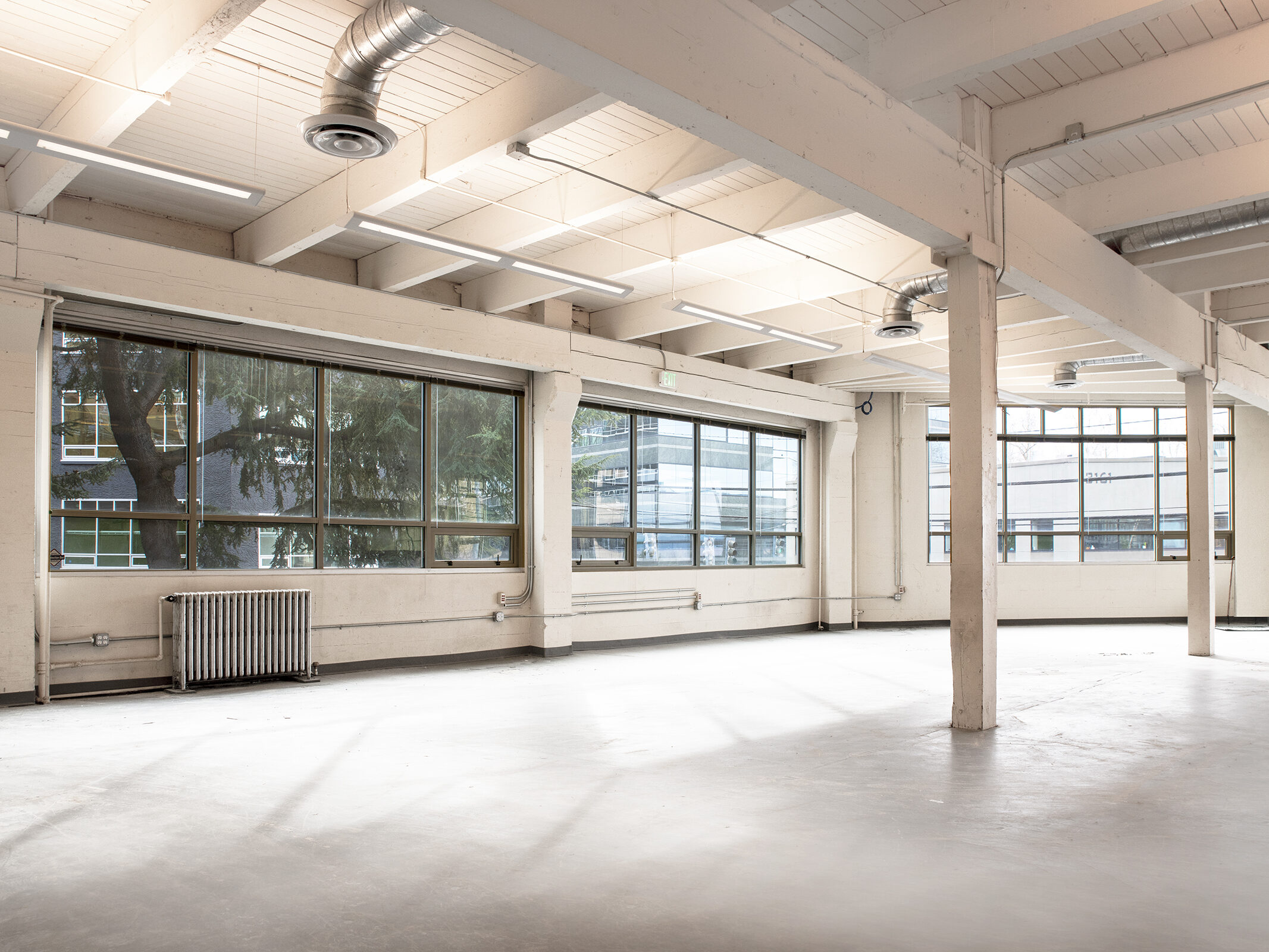
Seattle’s inventory of historic warehouse and industrial buildings — many of which have been converted to office and creative workspace use — occupies a distinct position in the green building conversation. These buildings weren’t built to modern energy codes and aren’t typically pursuing LEED certification, but they carry environmental attributes that standard green building metrics don’t always capture: embodied carbon from original construction that doesn’t need to be reproduced, adaptive reuse that avoids demolition waste, and the material durability that century-old masonry and timber construction represents.
The EPA’s green building resources document how building reuse and adaptive conversion contribute to sustainability goals in ways that complement formal certification programs — providing context for why historic workspace conversions represent a different but meaningful form of environmental stewardship than new LEED-certified construction.
For Seattle entrepreneurs and small businesses whose values include environmental responsibility, a thoughtfully maintained historic building can represent a genuine sustainability choice alongside or instead of a new certified building — depending on how broadly sustainability is defined.
What Seattle Office Tenants Should Ask About Green Building Performance
Understanding LEED certification and Washington State’s green building framework gives Seattle small business tenants specific questions to ask any workspace or office provider before signing a lease. These questions establish whether a space’s green building claims are substantiated and whether its actual performance aligns with your operational expectations:
- Does the building hold LEED certification or any other recognized green building credential — and at what level?
- What is the building’s Energy Star score or equivalent energy performance benchmark, and how does that compare to similar buildings in Seattle’s market?
- How is the building’s HVAC and ventilation system managed — and does the system provide adequate fresh air exchange and temperature control for year-round office use?
- What are the typical utility costs per square foot, and are utilities included in the lease rate or billed separately?
- For historic buildings, what sustainability investments has the building owner made in insulation, windows, mechanical systems, or other improvements that affect energy performance and tenant comfort?
A workspace provider who answers these questions specifically and transparently is one treating green building performance as a genuine operational commitment rather than a marketing claim. The Seattle Office of Sustainability and Environment publishes resources on Seattle’s green building programs and benchmarking requirements that tenants can reference when evaluating any commercial space’s environmental performance claims.
Seattle Workspace With History, Character, and Community
Understanding LEED and green building certifications gives Seattle small business tenants a more complete framework for evaluating any workspace — one that goes beyond square footage and monthly rate to the building performance, environmental values, and tenant experience that determine whether a space actually supports how you work.
Office space in Seattle has been the Andrews family’s specialty since the late 1930s — offering 215,197 rentable square feet across three converted warehouse buildings with soaring ceilings and Elliott Bay views, bringing together artists, attorneys, hairstylists, and entrepreneurs in a community that reflects Seattle’s creative and industrial heritage. Browse our available spaces — including a 1,280 RSF commercial suite, a 4,294 sq ft Seattle space, accessible suites, and Suite A355 — each offering the character and community that Seattle entrepreneurs deserve.
With 80–85% of our spaces already filled, availability is limited — ask us about current availability and come see the space for yourself.
